Choosing a patio shade cover is one of the most impactful decisions you can make for your outdoor living space. The right cover transforms an exposed, uncomfortable patio into a shaded retreat you can use from May through October. The wrong choice — one that doesn't match your sun exposure, wind conditions, or usage patterns — ends up being an expensive disappointment. This guide walks through the key factors Idaho homeowners should consider when selecting a patio shade cover, with honest comparisons of the main options available.
Step 1: Assess Your Sun Exposure
Before choosing any patio shade cover, you need to understand your specific sun exposure. In the Treasure Valley, the most challenging exposures are west-facing and south-facing patios, which receive the most intense afternoon and midday sun respectively. East-facing patios get morning sun and are typically more comfortable in the afternoon. North-facing patios rarely need shade covers for sun control, though they may benefit from wind screens.
Walk your patio at 2 PM and 4 PM on a clear summer day and note where the sun hits. If your patio is fully exposed during those hours, you need a patio shade cover with high UV blocking — at least 90% UV protection, and ideally 97% or higher for Idaho's intense summer sun. If you only need shade for a portion of the day, a retractable cover that you can deploy selectively may be more practical than a fixed installation.
Step 2: Consider Your Wind Conditions
Wind is the factor that most Idaho homeowners underestimate when choosing a patio shade cover. The Treasure Valley experiences regular afternoon wind gusts of 15 to 30 MPH during summer, and properties in Star, the Eagle foothills, and open Meridian developments can see even stronger gusts. A patio shade cover that isn't rated for these conditions will flap, bow, and potentially detach — creating both a safety hazard and an expensive repair.
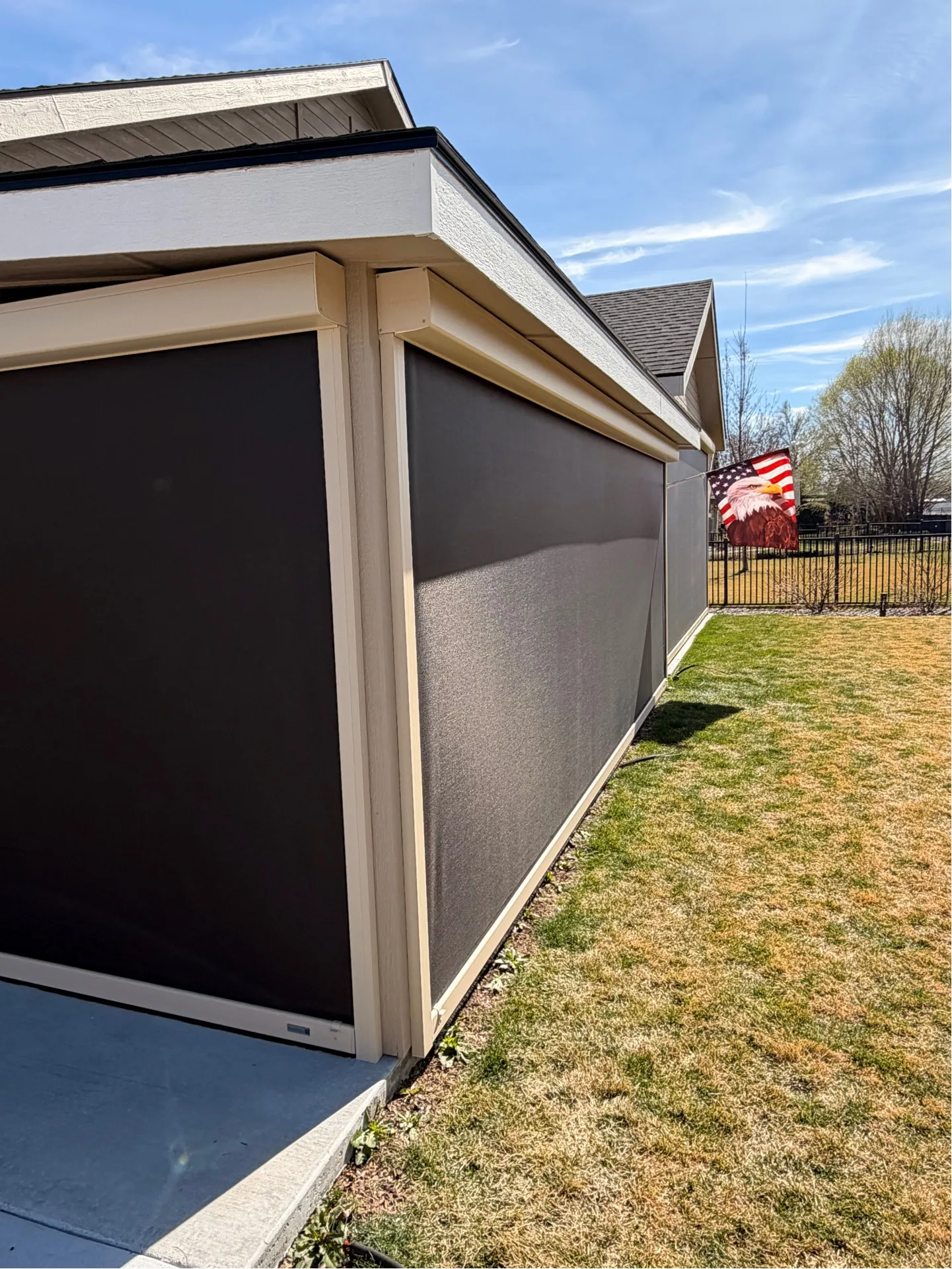
When evaluating patio shade covers for wind resistance, look for systems with track-guided fabric rather than cable-guided systems. MagnaTrack's magnetic track technology holds the fabric securely in the track even in high winds, with a 75 MPH wind rating that exceeds any other residential exterior shade system on the market. For exposed properties, this wind rating is not a luxury — it's a necessity.
The Main Types of Patio Shade Cover
Motorized Exterior Roller Shades
Motorized exterior roller shades are the most versatile patio shade cover option for Idaho homes. The shade fabric rolls up into a compact housing when not in use and drops down on demand. Motorized operation means you can raise and lower the cover with a button, a voice command, or an automated schedule — without leaving your seat. For patios with multiple openings, you can control all shades simultaneously from a single remote or app. This is our most-installed patio shade cover type across Boise, Eagle, Meridian, and Star.
Retractable Awnings
Retractable awnings extend horizontally from the wall or fascia to create overhead shade coverage. They're ideal for open decks and patios without overhead cover, and they're one of the more affordable patio shade cover options. SunPro motorized awnings include wind sensors that automatically retract the awning in high winds, which is an important safety feature for Idaho's afternoon gusts. The main limitation of retractable awnings is that they only provide overhead coverage — they don't block sun from the sides, which means afternoon sun can still reach your patio from low angles.
Fixed Shade Structures
Fixed shade structures — pergolas, shade sails, and permanent fabric canopies — provide consistent coverage without the mechanical complexity of motorized systems. They're a good choice for areas where you always want shade, such as a pool deck or children's play area. The downside is that fixed structures can't be adjusted for changing conditions, and they may block desirable sun during cooler months. For Idaho's climate, where you want shade in summer but sun in spring and fall, a retractable or motorized patio shade cover is usually a better long-term investment.
Choosing the Right Fabric for Your Patio Shade Cover
The fabric you choose for your patio shade cover affects everything from UV protection to visibility, privacy, and airflow. Exterior shade fabrics are rated by their openness factor — the percentage of the fabric that is open weave. A 3% openness factor means 3% of the fabric is open, allowing some light and airflow while blocking 97% of UV radiation. A 10% openness factor allows more light and airflow but provides less UV protection.
- •1–3% openness: Maximum UV protection and privacy, minimal view-through. Best for west-facing patios with intense afternoon sun.
- •5% openness: Good balance of UV protection and outward visibility. Most popular choice for residential patios.
- •10% openness: Good airflow and view-through, moderate UV protection. Best for covered patios that need airflow more than full sun blocking.
- •Blackout fabric: Complete light blocking. Best for outdoor media rooms, sleeping areas, or spaces that need full darkness.
For most Idaho patios, we recommend a 3% to 5% openness factor fabric. This provides strong UV protection while still allowing you to see out from inside the shaded space. All of our exterior shade fabrics are UV-stabilised for outdoor use and rated for Idaho's freeze-thaw climate.
Manual vs. Motorized: Which Is Right for Your Patio Shade Cover?
Manual patio shade covers are operated by a hand crank or pull cord. They're less expensive upfront and have no electrical components to maintain. Motorized covers cost more but offer significantly greater convenience — especially for large shades, high-mounted installations, or homeowners with mobility limitations. For patios where you'll be raising and lowering the shade multiple times per day, the convenience of motorized operation is worth the additional cost.
If you're considering smart home integration — controlling your patio shade cover from your phone, setting automated schedules, or linking it to a weather station — motorized is the only option. Lutron and Somfy motorized systems integrate with Apple HomeKit, Amazon Alexa, Google Home, and most major smart home platforms.
What Does a Patio Shade Cover Cost in Boise?
Patio shade cover pricing in the Treasure Valley varies based on the system type, size, and features. As a general guide: manual exterior roller shades for a standard 10-foot opening start around $810 installed. Motorized versions of the same opening run $1,350 to $2,700 depending on the motor and control system. MagnaTrack motorized systems — which include the magnetic track and higher wind rating — typically range from $2,025 to $5,400 per opening. Retractable awnings start around $1,350 for a 10-foot motorized model.
Ready to find the right patio shade cover for your home? Boise Blinds offers free in-home consultations throughout the Treasure Valley — Boise, Eagle, Meridian, Star, Nampa, Caldwell, and Kuna. Call (208) 501-5684 or schedule online to get started.
Frequently Asked Questions
What is the best patio shade cover for Idaho wind?
MagnaTrack's magnetic track exterior shade system is the best patio shade cover for Idaho's wind conditions. It's rated for 75 MPH winds — the highest rating available for residential exterior shades. The magnetic track holds the fabric securely even in strong gusts, unlike cable-guided systems that can flap or detach.
How long does a patio shade cover last?
A professionally installed, quality patio shade cover should last 10 to 15 years with normal use and maintenance. MagnaTrack systems carry a 5-year warranty on motors and components. Fabric life depends on UV exposure and cleaning frequency — most exterior shade fabrics are rated for 10+ years of outdoor use.
Can I add a patio shade cover to an existing pergola?
Yes. Motorized roller shades and MagnaTrack screens can be mounted to most existing pergola structures. We assess the structural integrity of your pergola during the free consultation and recommend the appropriate mounting approach. In some cases, minor structural reinforcement is needed before installation.
Do patio shade covers reduce energy bills?
Yes, significantly. Exterior patio shade covers block solar heat before it enters your home through adjacent windows and glass doors. The U.S. Department of Energy estimates that exterior shading can reduce cooling loads by up to 60%. Most Treasure Valley homeowners with west-facing patios report noticeable reductions in air conditioning run time after installation.